When a rogue wave appears at the horizon, there is only one option to survive. Peddle and surf. Failing to recognize a rogue wave arriving will inevitably result in a disaster.
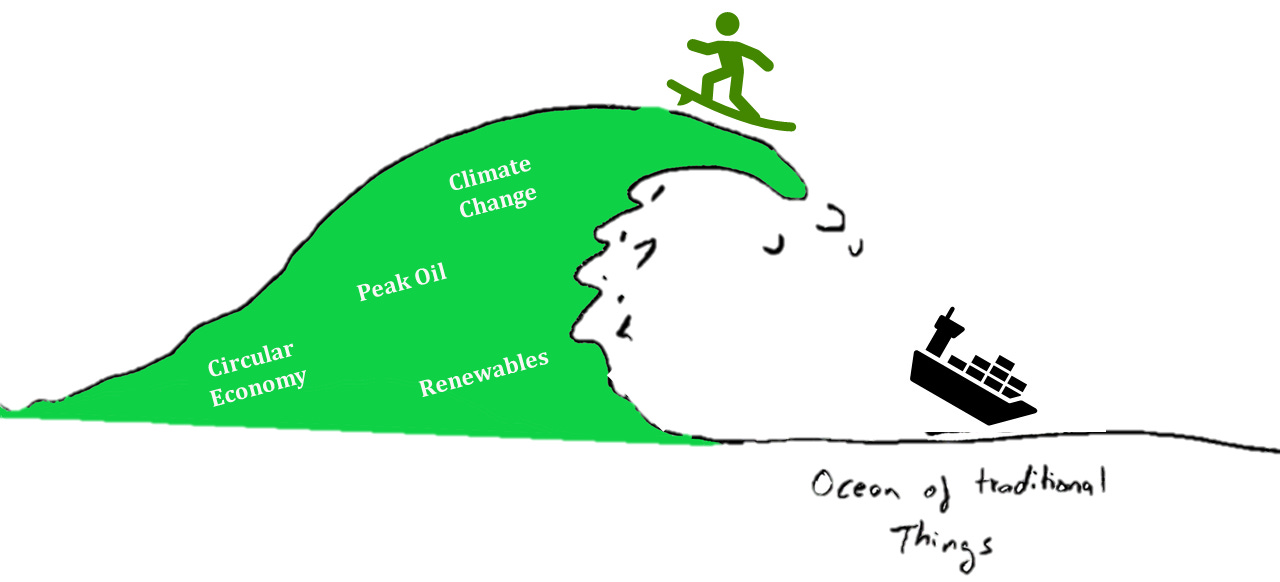
Remember Kodak and the digitalization rogue wave? The problem was not that Kodak management didn’t see the digitalization wave coming. They failed to recognize its amplitude and power. They considered digital as a complement to their successful chemicals business (films & print), not as a new market overtaking analog cameras.
The sustainable rogue wave hits the automotive sector
The automotive industry is facing a sustainable rogue wave fueled by at least 4 interdependent forces. (i) Oil is becoming scarcer. (ii) Cities can’t cope with pollution and traffic jams. (iii) Legislators put emission constraints. (iv) Millennials don’t value car ownership like the baby boomers.
On top of these sustainable forces, digitalization is the last nail in the coffin of historical carmakers who failed to recognize the rogue wave. The best car software comes from Apple, Tesla, Waymo (Alphabet), and Waze (Alphabet).Subscribe
Fiat Chrysler is in denial mode
After many years of failed attempts (among others with Renault), Fiat Chrysler Automobiles (FCA) finally found a company to merge with (Peugeot- Citroën PSA). Fiat long-standing (2004-2018) CEO Sergio Marchionne achieved a successful turnaround of the company ten years ago. Yet, he failed to recognize the sustainable rogue wave arriving. Like Kodak’s management for digitalization, he downplayed the impact of sustainability and undermined the car industry’s sustainable progress.
Some facts to prove my point:
- 2007: CEO Sergio Marchionne: “You can’t pile on climate regulation on the car industry during its worst time in the last 10 years.”
- 2014: After Fiat’s launch of an electric car in California to comply with regulation, Sergio Marchionne calls out “not to buy our electric cars.”
- 2017: CEO Sergio Marchionne’s: “As much as I like Elon Musk, and he’s a good friend, and actually he’s done a phenomenal job of marketing Telsa, I remain unconvinced of a … economic viability of the model that he’s pitching.”
- 2018: Sergio Marchionne is stepping down as CEO (due to illness) of FCA and is replaced by Mike Manley, who spent the last 10 years at Jeep and Ram’s head. These brands produce inefficient heavy 4x4s. Not really the cars of the future.
- YE 2019: FCA fights on the side of the Trump administration in an escalating battle with California over fuel economy standards for automobiles
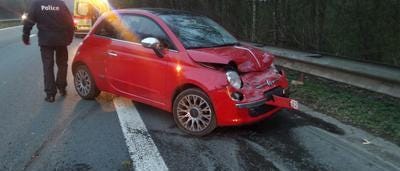
Elektrek.co: “It’s fair to say that Fiat Chrysler Automobiles (FCA) hasn’t been the fastest off the mark when it comes to electric cars. With the lead-footedness displayed across all its brands — Abarth, Alfa Romeo, Chrysler, Dodge, Fiat, Jeep, Lancia, Maserati, and Ram — you could be forgiven for thinking that the Italian-American multinational simply isn’t interested in having an electric future. Or a future at all.”
The consequences on Fiat Chrysler (FCA), on top of declining sales, are substantial:
- 2019: FCA has agreed to pay Tesla hundreds of millions of euros, so the electric carmaker’s vehicles are counted in its fleet to avoid large fines for breaking tough new EU emissions rules.
- 2019: Fiat Chrysler is under increasing pressure to invest in clean car technology. The company faces a US$79 million fine for falling short of U.S. fuel efficiency standards.
Synergies between PSA & FCA
The recent confirmation of the merger between PSA (Peugeot-Citroën-Opel) and Fiat-Chrysler is a traditional consolidation move aimed to (try to) save Fiat from the Sustainable Rogue Wave.
The motives of the merger are traditional. Peugeot hopes to finally break the US market, while cost synergies are to be found in EV R&D spending. “Peugeot and Fiat Chrysler could over time share engines and vehicle architectures, reducing capital spending and freeing up cash to invest in electric vehicles and emissions reduction technology required in Europe, China and other global markets.”
Conclusion… Sustainable Hope
Although FCA remained for too long in the denial phase regarding sustainability and climate change, the company starts to peddle (not yet surf) to try to catch up with the wave. They recently launched the Fiat 500e (155 miles autonomy), probably one of the sexiest EVs, thanks to its unique Italian style.
On top, the Agnelli family (Fiat owners) recently invested in Brussels-based electric bike startup Cowboy. Yes, there is sustainable hope!
 Miguel's Notes
Leave a comment